
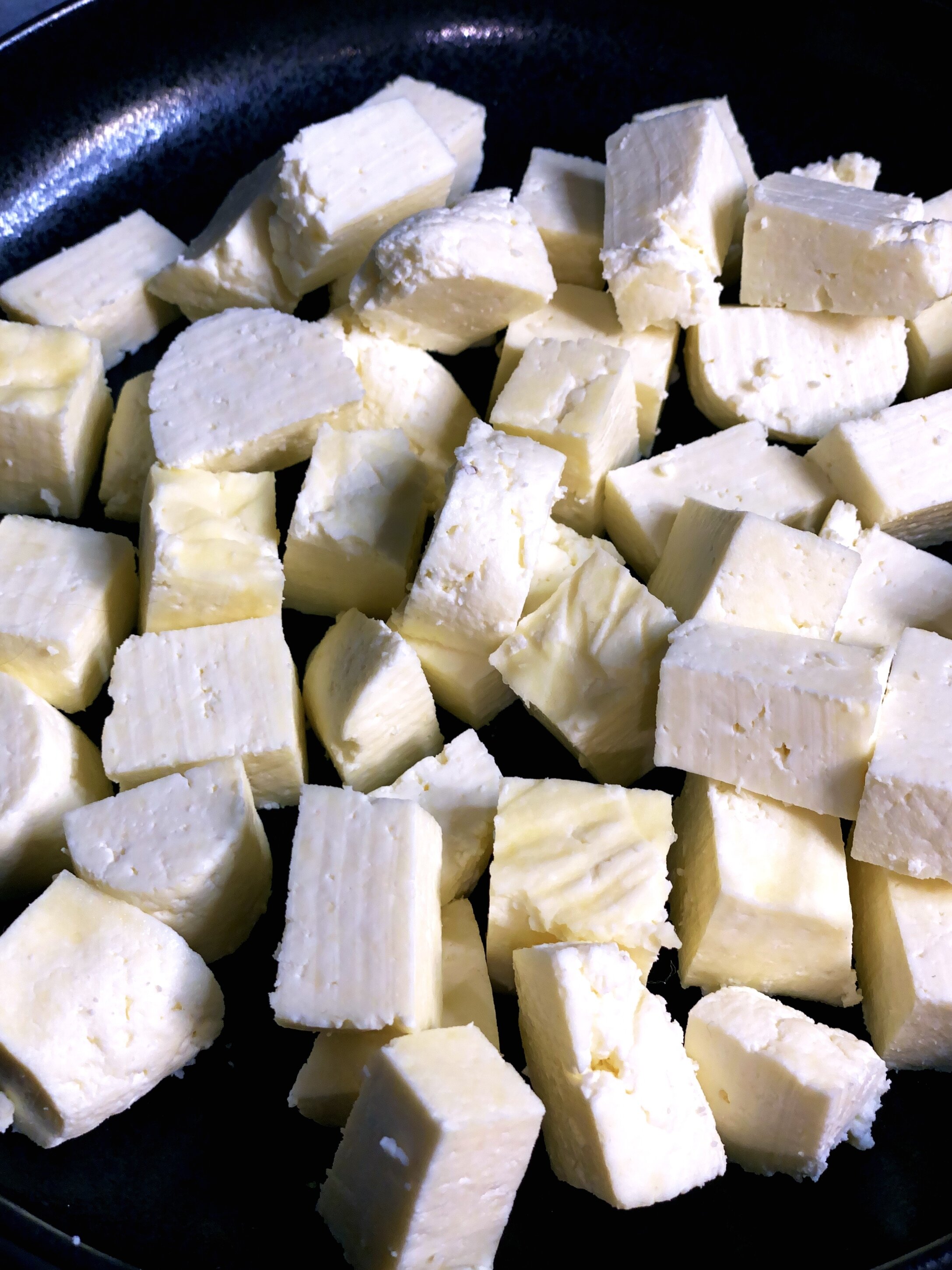
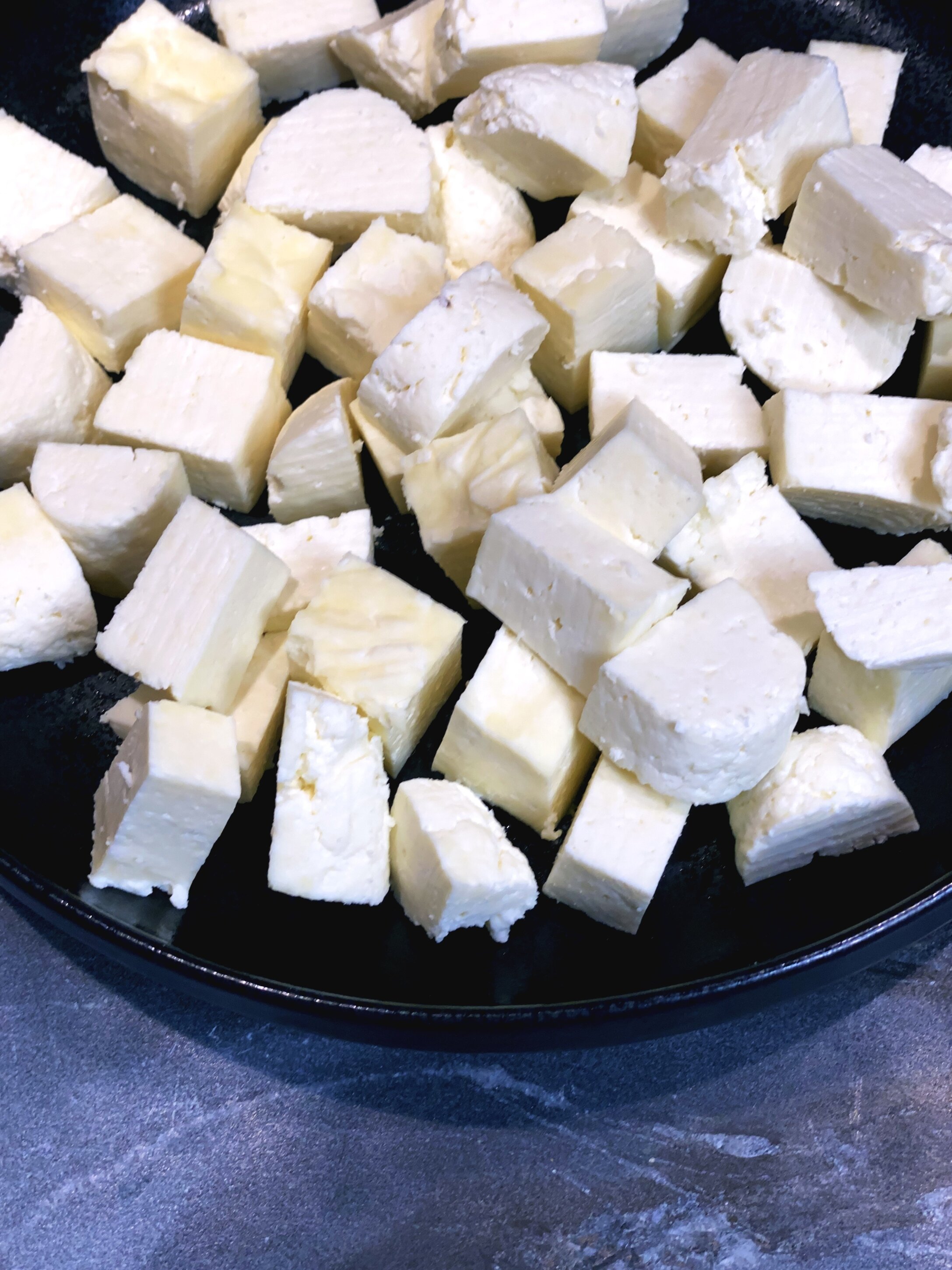
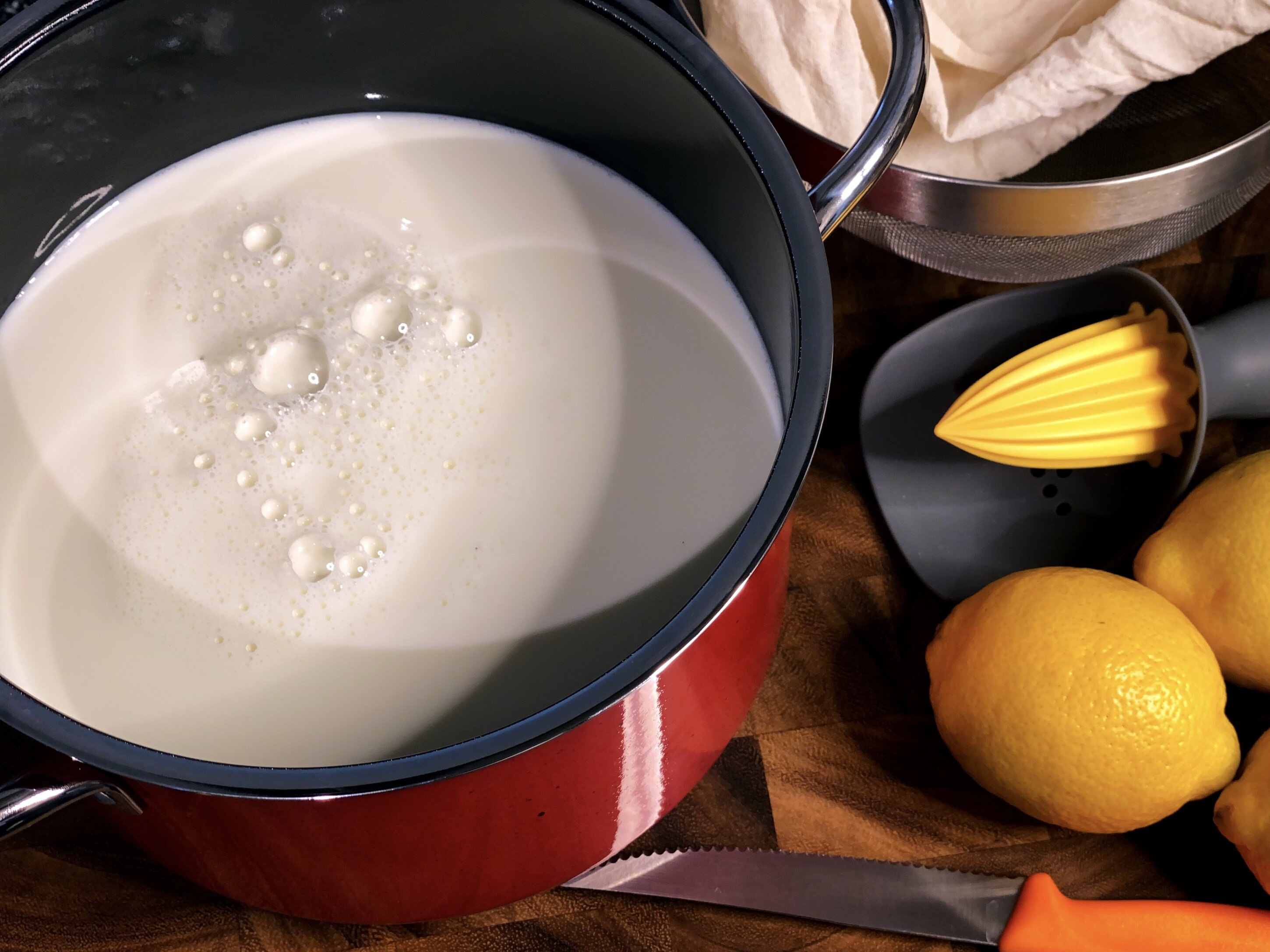
Ingredients for about 400 g
- 2 L milk (3.5% fat)
- 4 tbsp lemon juice
Instructions
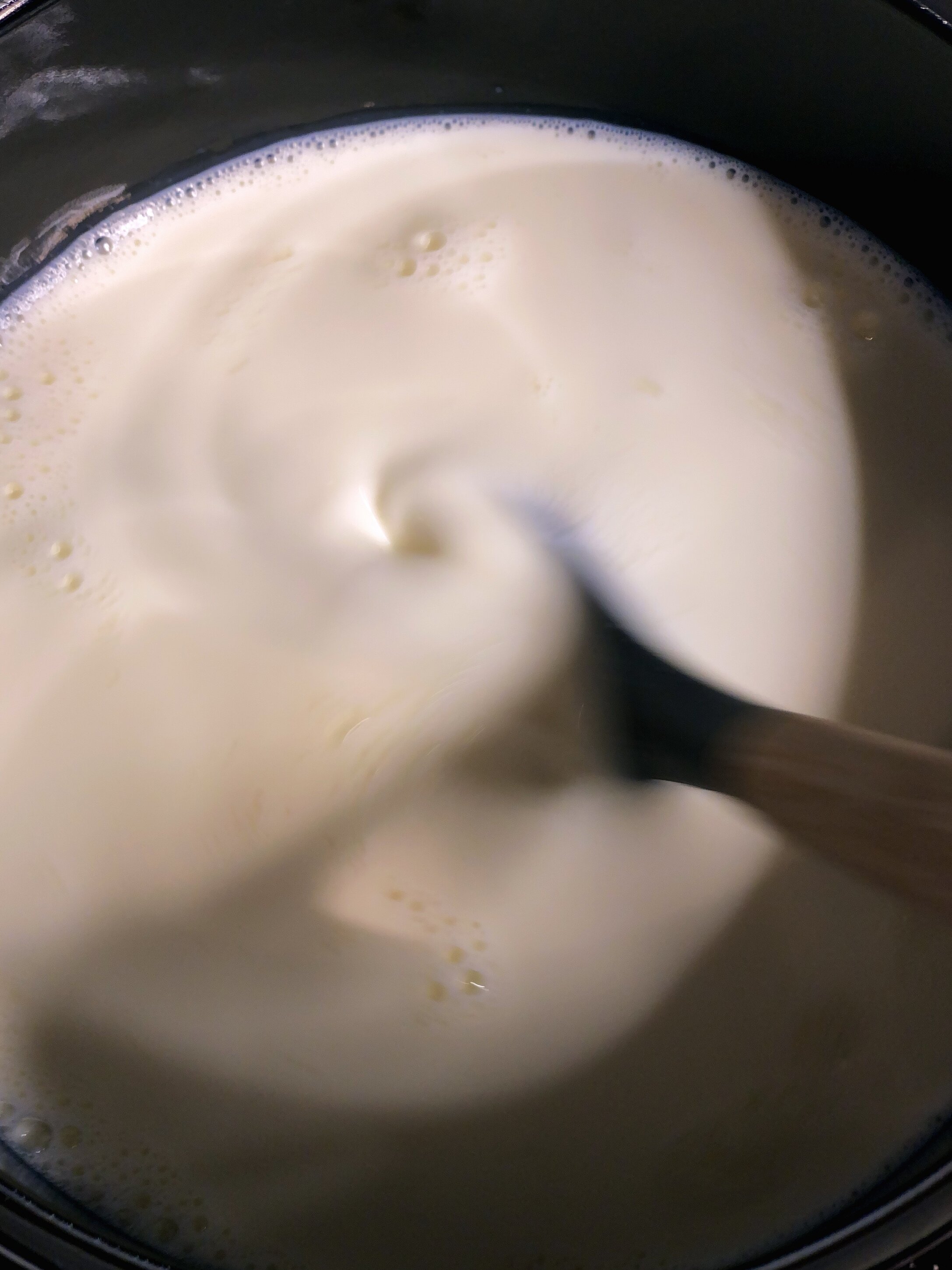
Slowly bring the milk to a boil in a saucepan with a thick bottom. Stir regularly to prevent a skin from forming on the surface and to keep the milk from sticking to the bottom of the pan.
In the meantime, prepare your workspace. Line a sieve with a muslin cloth or fine-mesh kitchen towel and place everything in the sink. You could also line the pot directly with the muslin or fine-mesh kitchen towel, but using a sieve is very helpful to avoid mess.
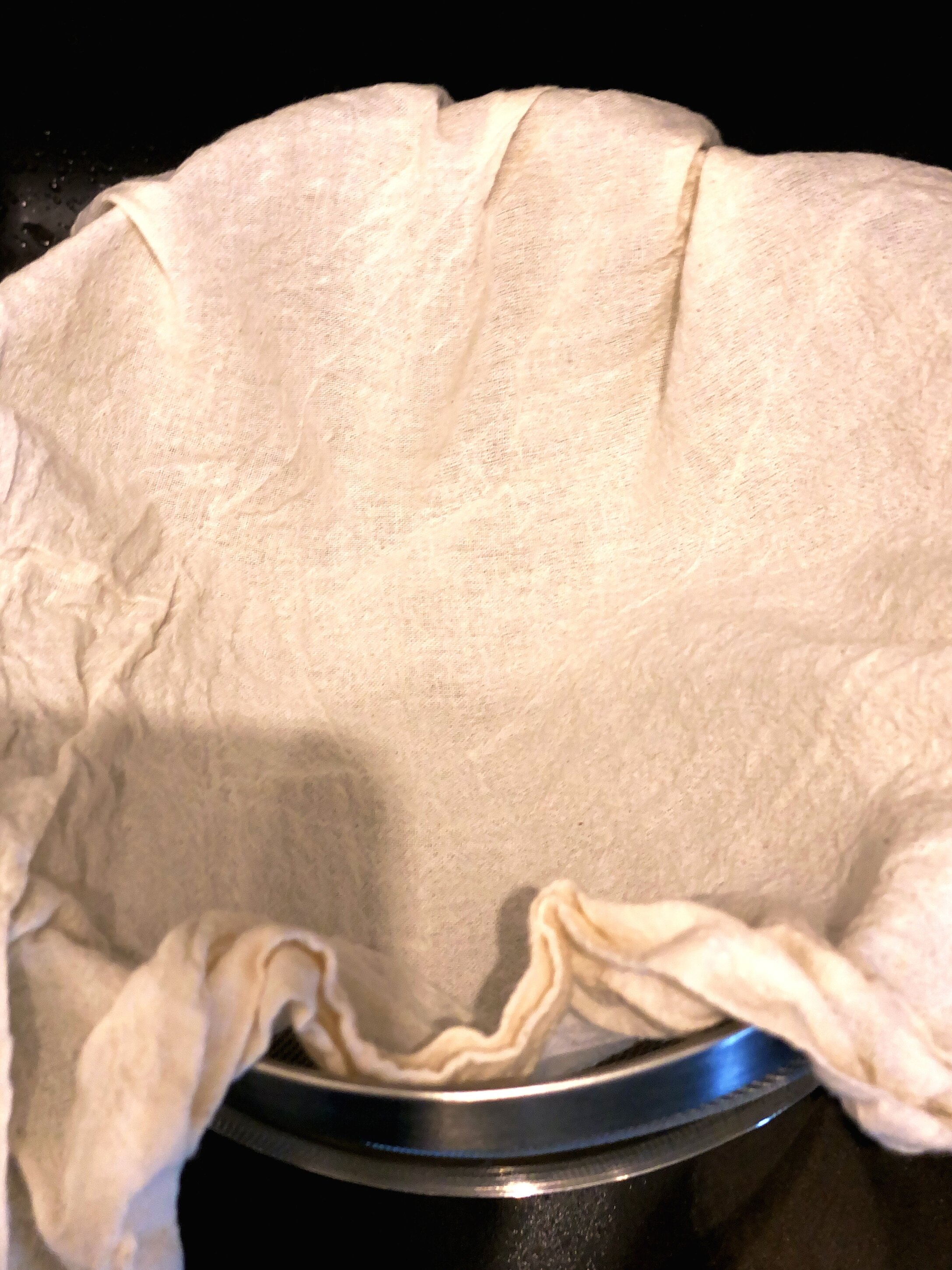
Reduce the heat as soon as the milk comes to a boil.
Now it's time to add the food acid of your choice:
- Lemon juice – 2 to 4 tablespoons
- Vinegar – 4 to 6 teaspoons
- Buttermilk – 8 to 10 tablespoons
- Quark – at least 6 to 8 tablespoons
The amount of acid required depends on the quality of the milk used. The more fat in the milk, the more food acid you need to make your paneer. For this portion of paneer I use lemon juice as the acid. It's my favorite because it gives me a mild and fresh cheese flavor.
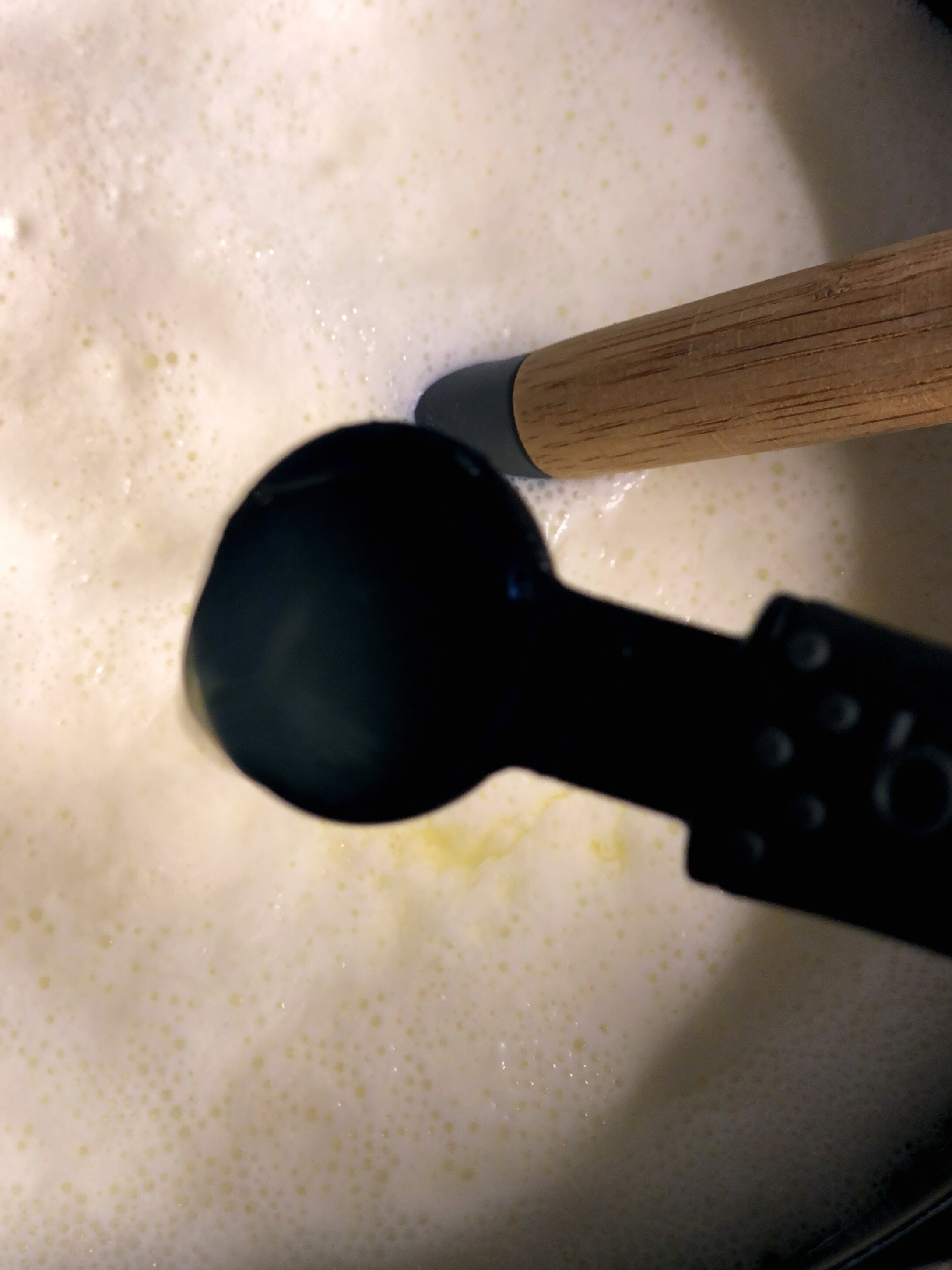
Stir in the lemon juice to curdle the milk. The milk must be completely curdled before you can prepare paneer. Keep stirring the milk so it doesn't stick to the bottom of the pot.
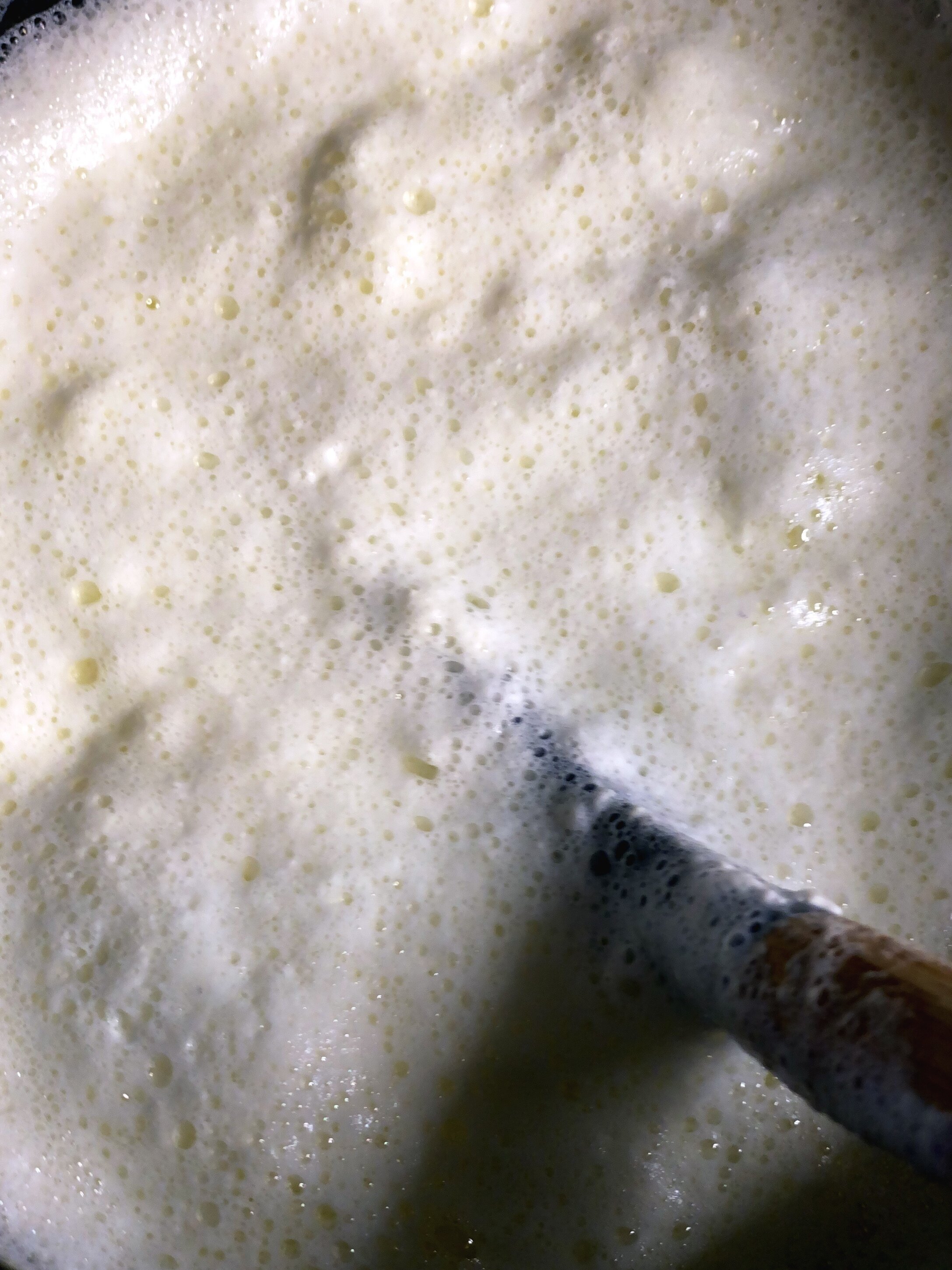
After the milk has completely curdled and you see a greenish whey (this is the separation of whey and protein), remove the mixture from the stove and set it aside for a few minutes.
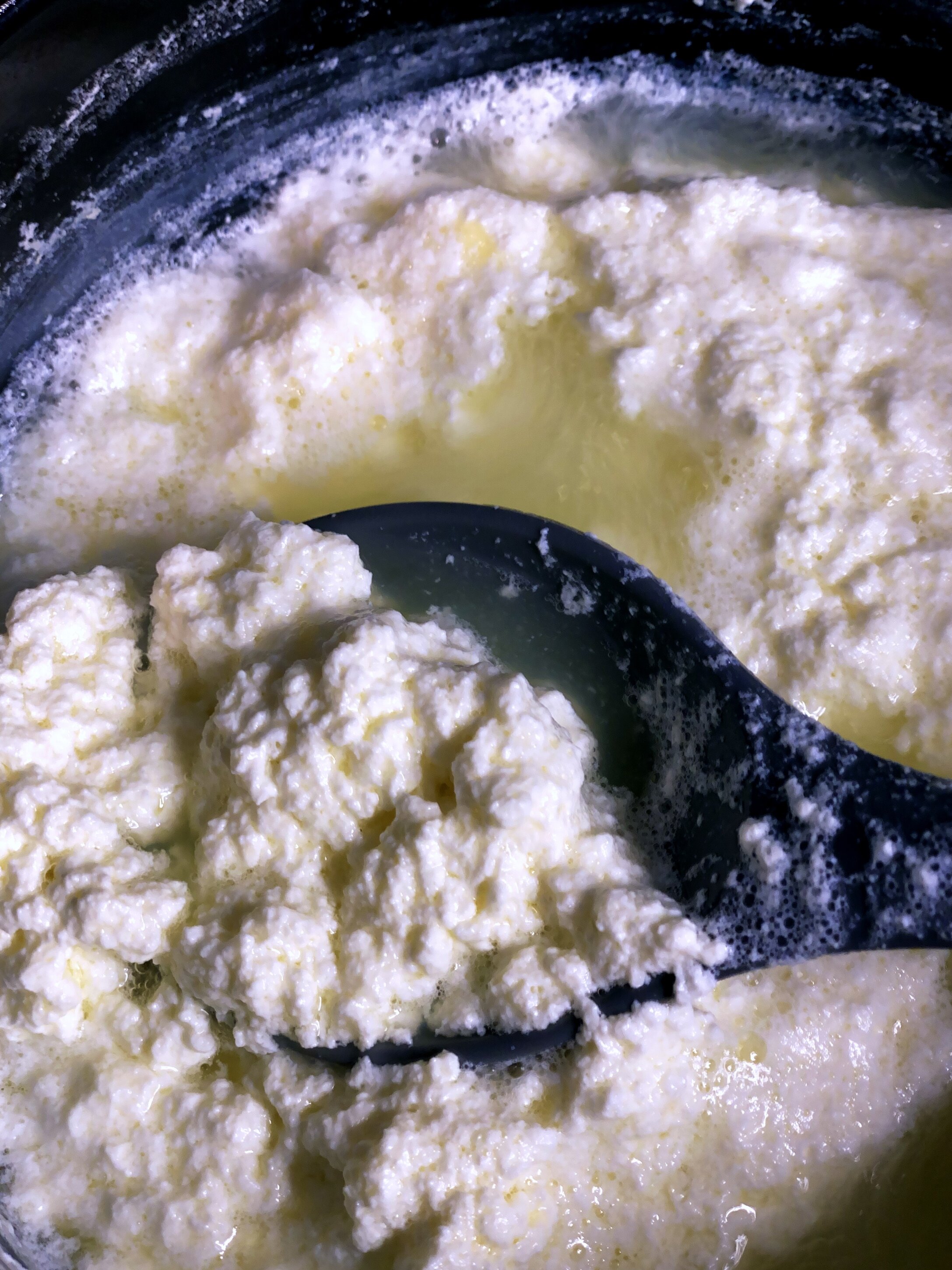
Slowly pour the curds into the lined sieve and drain off the whey.
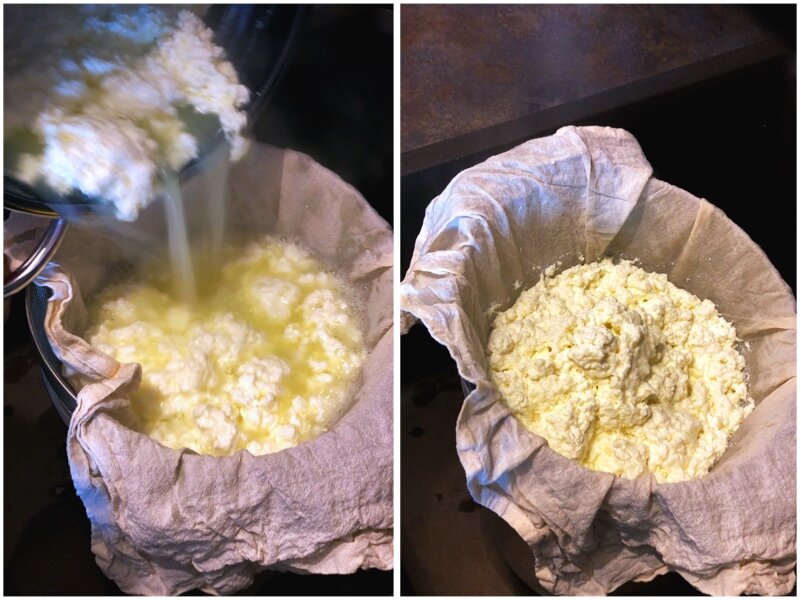
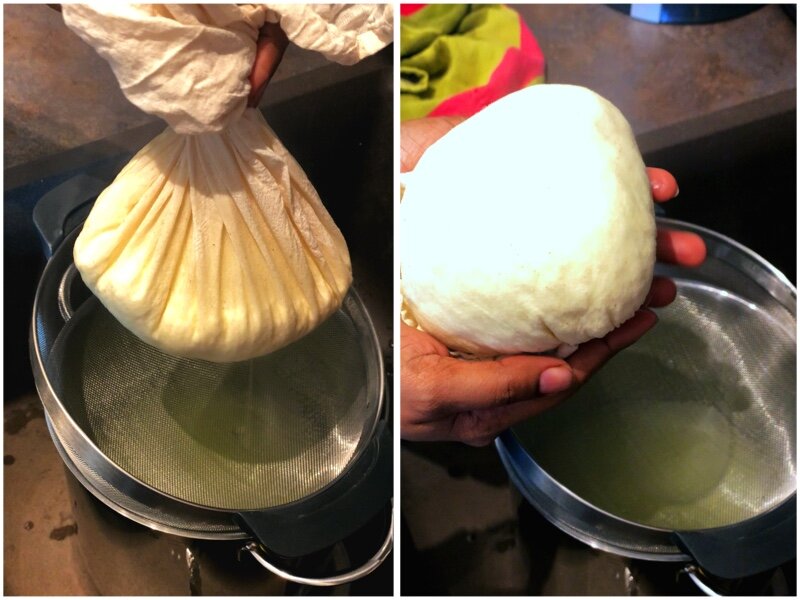
Gather the corners of the cloth together and twist them tighter and tighter over the cheese mixture until the cloth fits snugly around the paneer ball. Be careful, the curdled milk mixture will be very hot. Lift the bundle and let it drain until it no longer drips.
Run fresh water over the held bundle to rinse the curds. This ensures that any lemon or vinegar flavors are washed away with the water. If you used quark or buttermilk, you do not need to perform this step.
Hold the cloth tightly, place a weight on the cheese, and let it continue to drain. In the picture below, I used the mortar from my mortar and pestle set. But you can also create the necessary weight with some stacked plates.
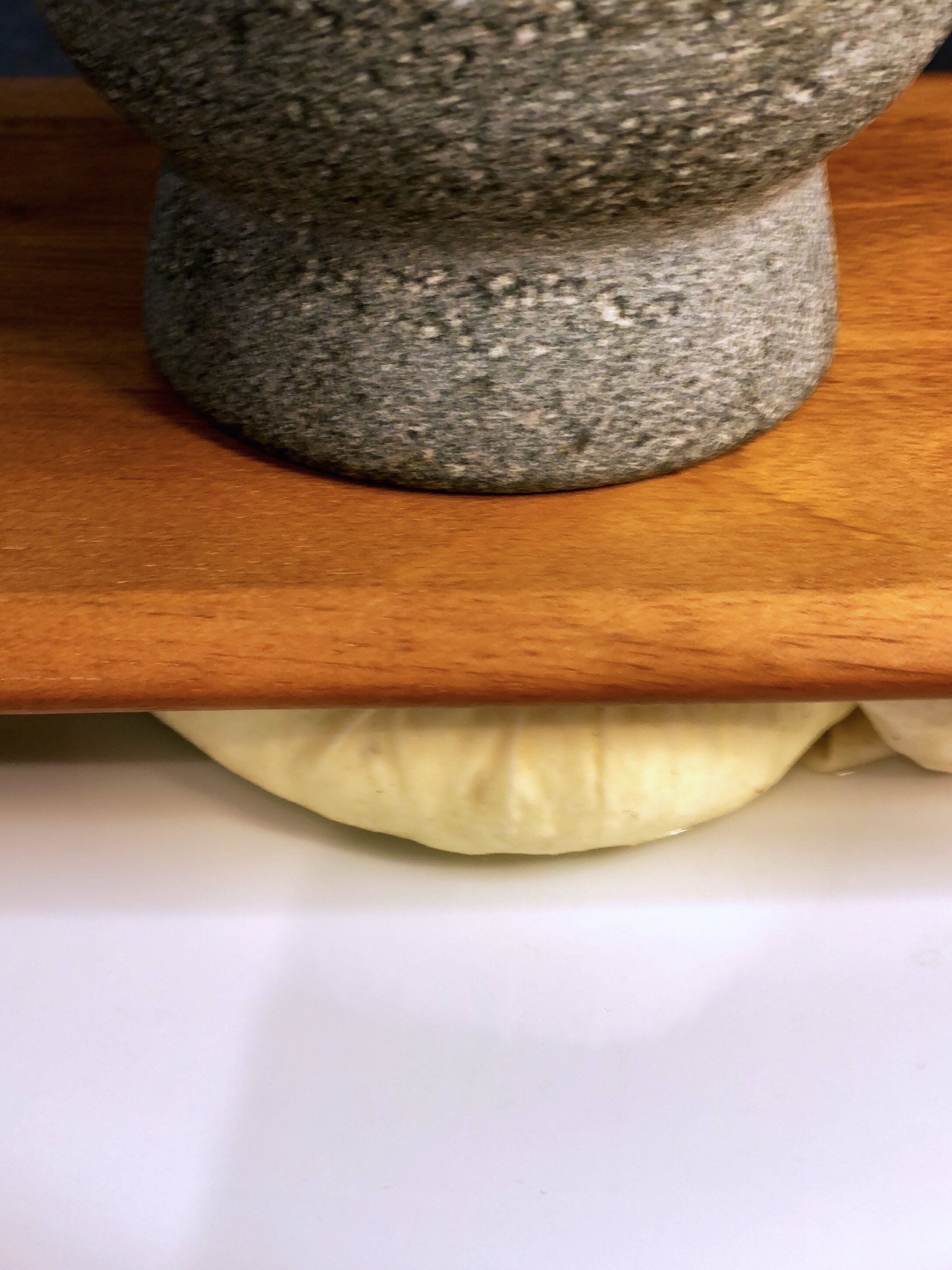
After 30 to 40 minutes of pressing time, the paneer is ready. The longer you leave the weight on the paneer, the firmer your cheese will be. For a softer texture, remove the weight earlier (after about 25 minutes).
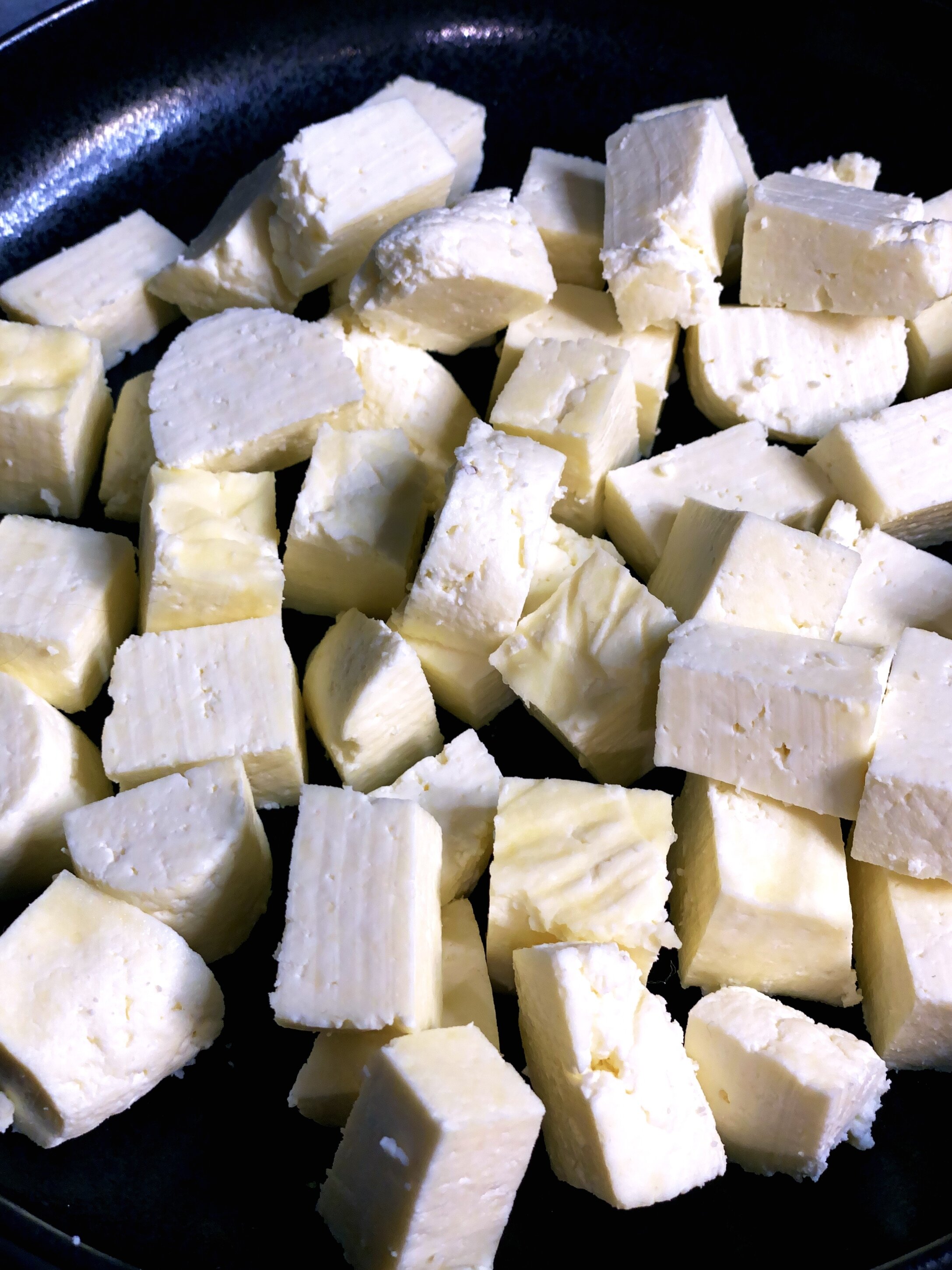
Now you have a beautiful block of smooth and delicate paneer.
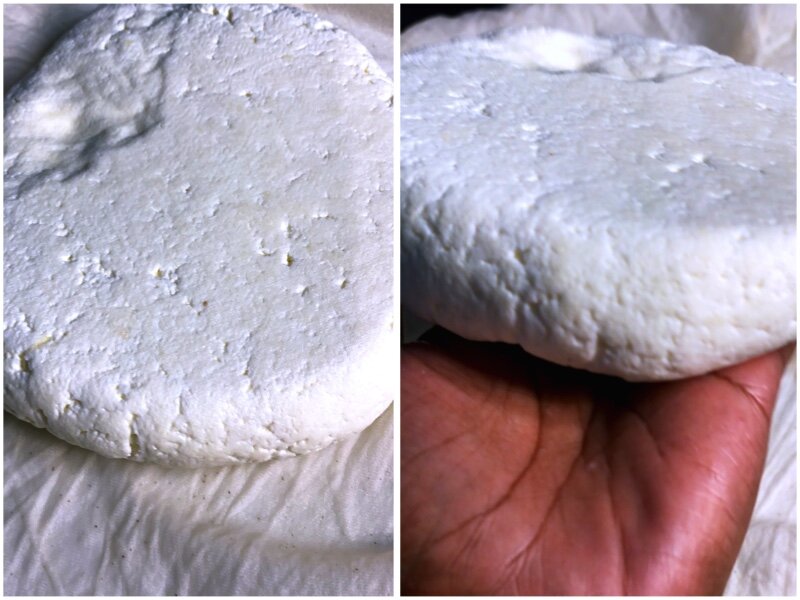
Use the paneer immediately for cooking, or wrap it in plastic wrap and store it in an airtight container in the refrigerator for later. The paneer will keep for 6 to 7 days this way.
Tips
- For especially firm paneer you can stir a few tablespoons of milk powder into the milk.
- You can also collect the whey and use it for chapati or paratha dough. The whey helps make the dough smooth and soft.